Human Memory
The choices we make and experiences we have ultimately end up stored in memory. When retrieved, we have to decide whether a particular memory is true or if it’s changed over time. Intriguingly, research has shown that many of our recollections are biased—painting a rosier picture of reality—or outright false. Such distortions have been shown to have considerable psychological, legal, and even political consequences. While it is very difficult to obtain valid, reliable measures of false memory susceptibility for event memories to do this sort of work, it’s an important area of research that has significant real-world implications.
The main question Bob (Belli) and I worked together towards answering back in the day was (1) are there individual differences in susceptibility to false memories? and (2) can we differentiate between real and false memories after they’ve been formed? These are tough questions to answer well, given how challenging it is to obtain reliable measures of false memory susceptibility, but we did achieve some success in this area.
One of the cool things we pulled off was the first EEG study of false event memory for reenacted crime events (a paradigm known as the misinformation effect). In this study, we developed an EEG-friendly version of the misinformation effect paradigm and, using it, found that we could distinguish between true and false memories a day after they had been formed by looking at aspects of the neural signal related to the memory trace’s strength and the amount of attention oriented toward the presented retrieval cue (i.e., the test question they were being asked).
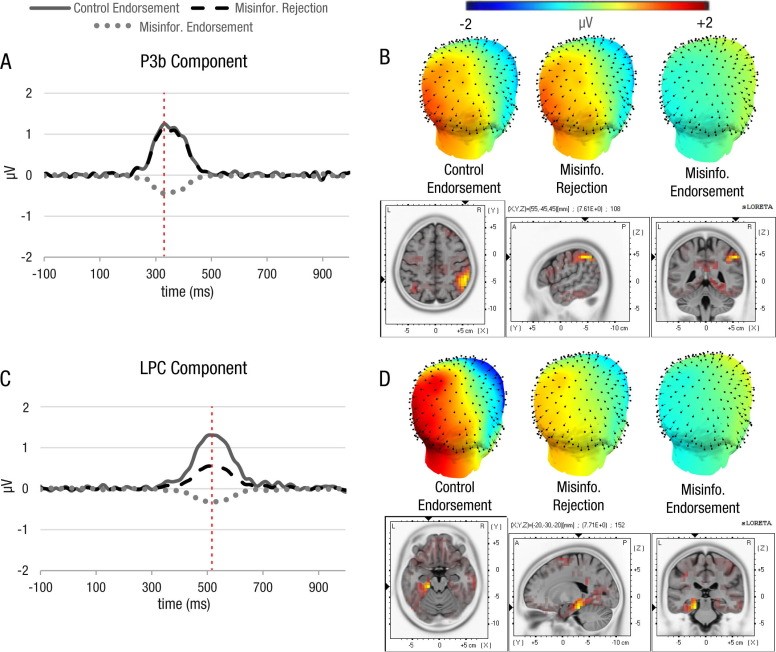
Kiat, J.E., Belli, R.F. (2017). An Exploratory High-Density EEG Investigation of the Misinformation Effect: Attentional and Recollective Differences between True and False Perceptual Memories. Neurobiology of Learning & Memory
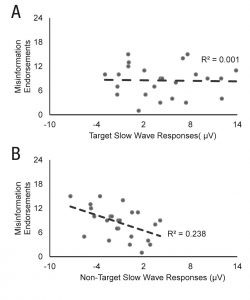
Building on the attention finding, we then went on to see if we could predict which individuals would be susceptible to forming false memories using their brain activity on an attention task known as the oddball paradigm.
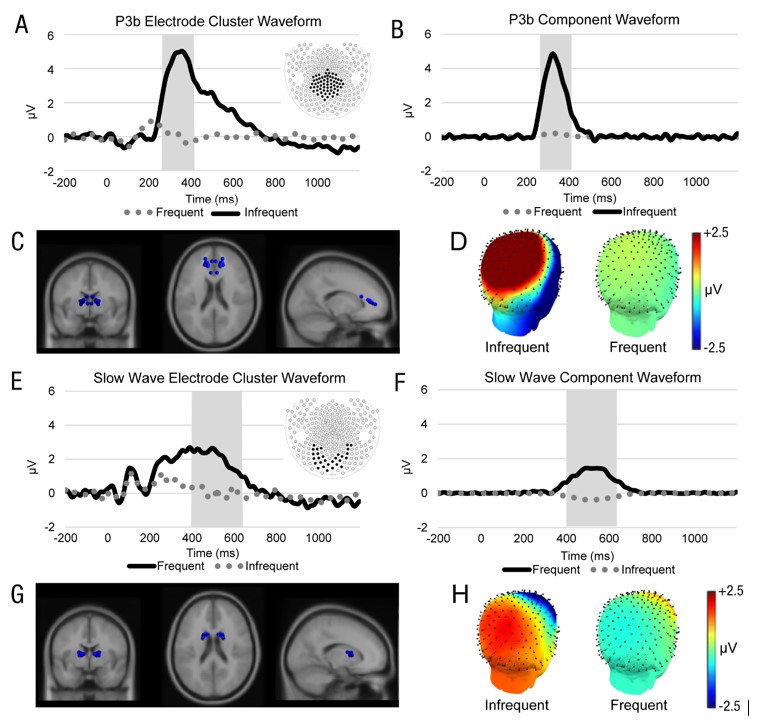
This worked, and we found that we could account for about 24% of individual variability in false memory formation with this approach. This was an interesting result and one that captures well my view of false memories as being a near-inevitable result from the limitations in the basic cognitive processes (in combination with imperfect information) involved in forming and storing memories in the brain.